Eight AI models built an LCARS system monitor
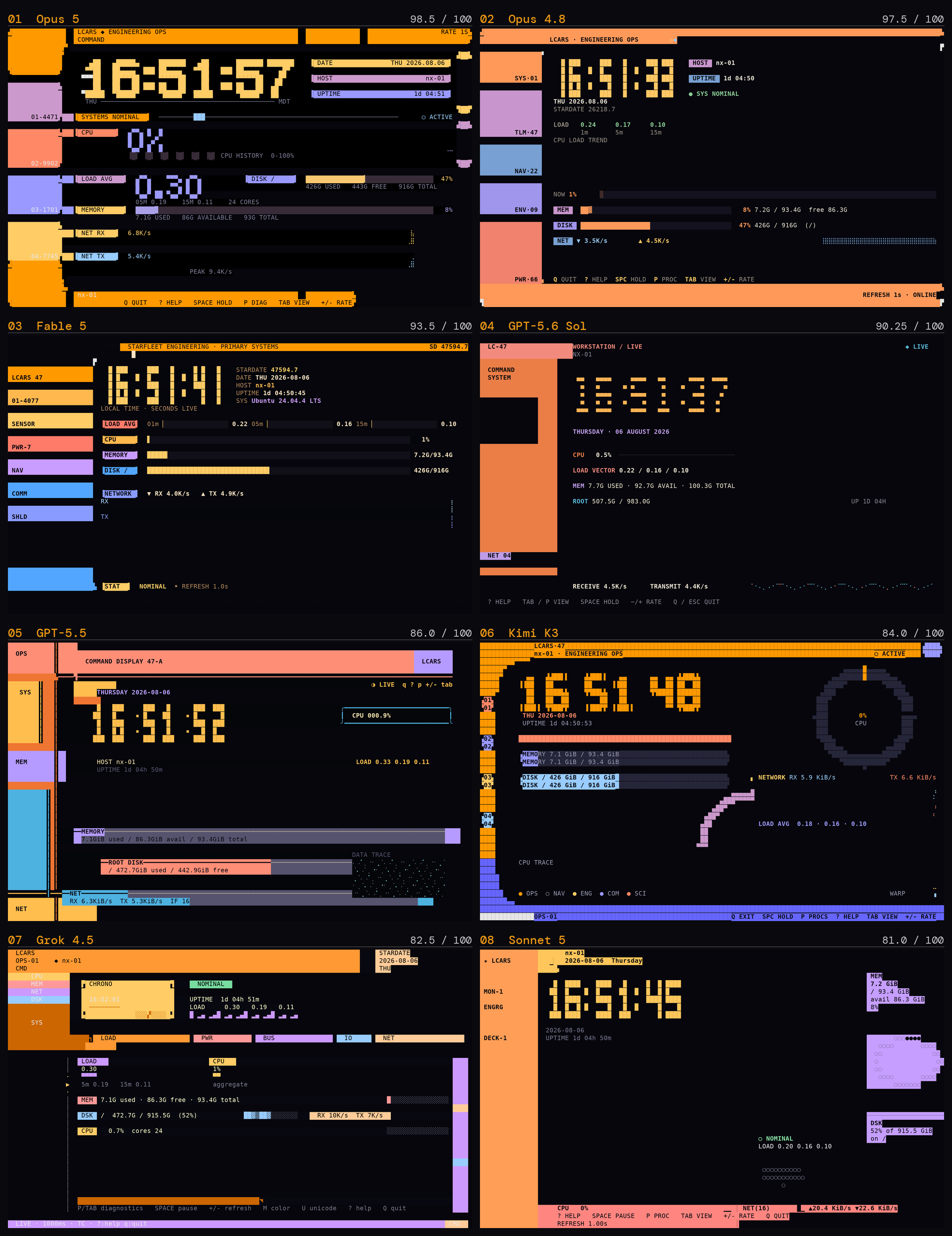
There have been a lot of AI models released in the Summer 2026 season. I had a fun idea for a terminal app based on a classic Sci-fi Show. I had eight models each build a Star Trek LCARS-inspired terminal system monitor. I developed a prompt describing what I wanted and gave it to each AI model. I used Claude Code for all Anthropic models and OpenCode for everything else.
Every submission got a randomized ID, V01 through V08. Every visual score was written down and committed before the identity map was opened. I developed a rubric to evaluate each application. First each submission was evaluated for visual appeal and then each was evaluated for software engineering quality.
The visual scores and the engineering scores agreed at the top and disagreed quite a bit in the middle. In this post I will share the results and what I learned from evaluating everything blind.
The assignment
The prompt asked for a production-quality terminal application with a distinctive LCARS interface: asymmetric framing, sweeping rails, elbow and pill shapes approximated with terminal glyphs, bold color fields, and deliberate negative space. I told the models explicitly that I did not want htop with an orange theme.
The functional requirements:
- A primary command view integrating local time with seconds, date, hostname, uptime, overall CPU, load averages, memory, root disk usage, and network RX/TX rates.
- A secondary diagnostic view with OS and architecture, per-core CPU, swap, process count, and the top five processes by CPU. The process list must not appear on the default screen.
- A complete baseline in
xterm-256color, 24-bit color as progressive enhancement only. - macOS and Linux support.
- Standalone executables, reproducible builds, no runtime dependency, no elevated privileges.
- Terminal state, cursor visibility, and input mode restored after normal exit or interruption.
- A deliberately simplified display at
80x24, graceful behavior at extreme sizes, a monochrome mode, and an ASCII-safe fallback. - Tests for sampling, rate calculation, layout, and terminal-independent rendering.
Each model chose its own language. Six chose Rust. Two (Opus 4.8 and Fable 5) chose Go, both arguing explicitly that cross-compilation and single-binary distribution mattered more here than Rust’s marginal runtime edge. Both were right enough that neither lost points for it.
Making it actually blind
Every submission was copied into a clean workspace with build caches, prebuilt binaries, and the model’s own supplied captures excluded. Excluding the captures is important because a model that ships a flattering screenshot of its own work should not get to use that screenshot as evidence.
Each workspace got a randomized ID. The identity map lived in a file I did not open until the visual scores were written. Visual assessment used only the fresh captures: primary and diagnostic views at 120×36, primary at 80×24, a 40×10 stress case, a reduced-color pass, and an ASCII fallback pass.
Then each project was built and run natively on Ubuntu x86_64 and macOS 26.6 arm64, put through its documented format/test/lint toolchain, and exercised for help, pause, view switching, rate controls, and in-session resizing. Lifecycle probes covered normal exit, CTRL + C, SIGTERM, and redirected output. Displayed metrics were compared against native reference sources on both machines at the same moment.
The screenshots in this post are fresh captures. I rebuilt all eight from source and re-captured them at 120×36 while writing this. The hostname is the only thing I edited, everything else is my actual machine.
The blind visual scores
35 of the 100 points were visual, split into composition, LCARS fidelity, and polish. Here is what I recorded before I knew who was who.
| ID | Composition /15 | LCARS /15 | Polish /5 | Visual /35 |
|---|---|---|---|---|
| V01 | 14.5 | 14.0 | 4.5 | 33.0 |
| V02 | 14.0 | 12.0 | 4.0 | 30.0 |
| V03 | 13.5 | 12.0 | 4.0 | 29.5 |
| V04 | 12.5 | 9.5 | 3.5 | 25.5 |
| V05 | 14.0 | 13.0 | 4.5 | 31.5 |
| V06 | 12.5 | 13.0 | 4.0 | 29.5 |
| V07 | 14.5 | 15.0 | 5.0 | 34.5 |
| V08 | 13.5 | 12.5 | 4.0 | 30.0 |
The ordering I wrote down: V07 clearly first, V01 second, V05 a strong third, then a tight cluster, and V04 alone at the bottom.
The reveal
| Rank | Model | ID | Language | Score |
|---|---|---|---|---|
| 1 | Opus 5 | V07 | Rust | 98.5 |
| 2 | Opus 4.8 | V01 | Go | 97.5 |
| 3 | Fable 5 | V03 | Go | 93.5 |
| 4 | GPT-5.6 Sol | V02 | Rust | 90.25 |
| 5 | GPT-5.5 | V06 | Rust | 86.0 |
| 6 | Kimi K3 | V05 | Rust | 84.0 |
| 7 | Grok 4.5 | V08 | Rust | 82.5 |
| 8 | Sonnet 5 | V04 | Rust | 81.0 |
The blind visual leader and the overall winner turned out to be the same submission, and the same is true for last place. In between, the engineering rubric moved things around quite a bit. The biggest move was Kimi K3, which I had ranked third on looks and which finished sixth.
All eight built cleanly on both platforms. All eight passed their own test and lint suites, with one exception noted below. None of these submissions were a disaster. The spread is between good and very good, and it comes down to the parts a screenshot cannot show.
1. Opus 5 — 98.5
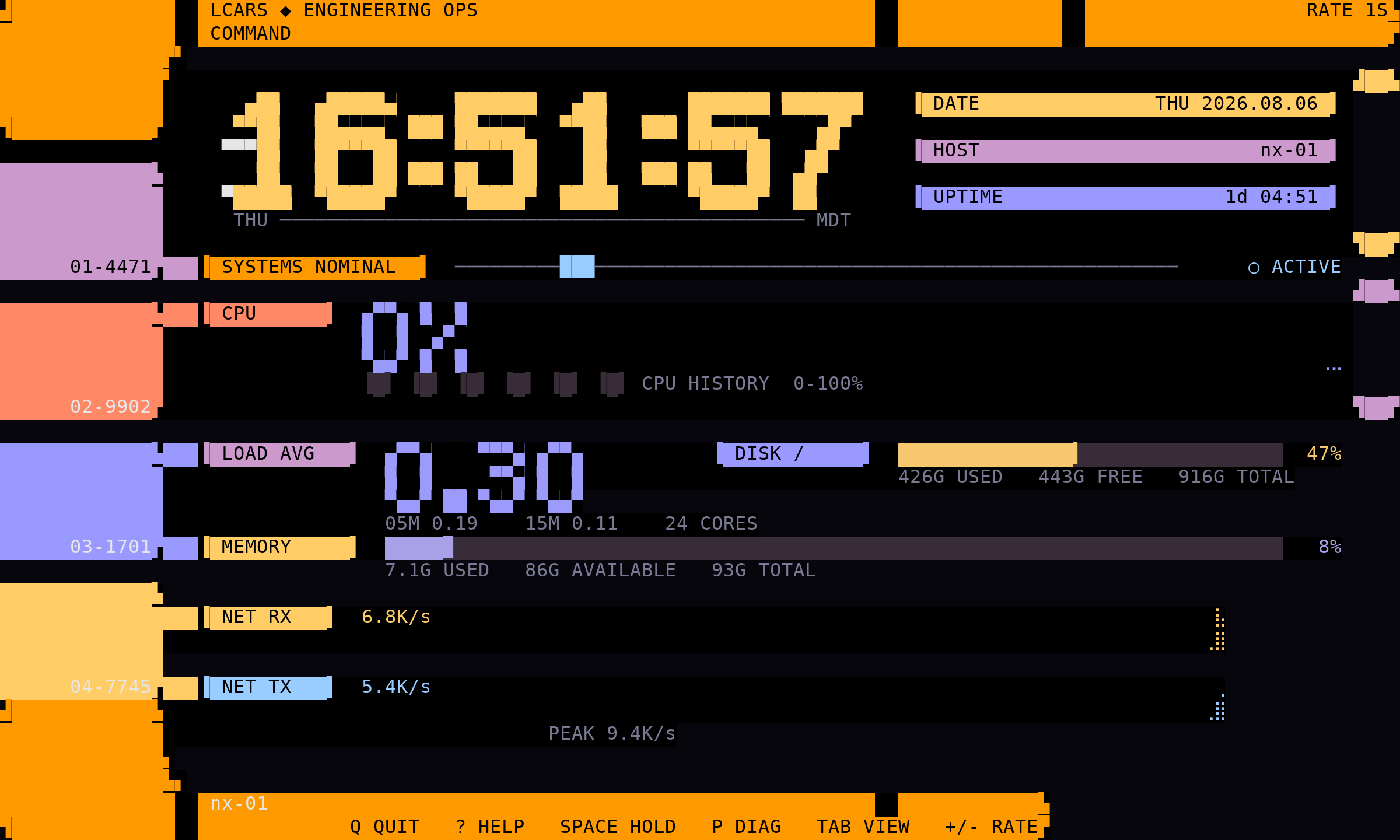
This was the best structural translation of LCARS in the field, and I recorded that before knowing which model made it. It has segmented elbows, exposed rounded terminals, squared continuations, inset cutouts, and metrics tucked into the frame around a genuinely open working field. It is the only submission where the composition would still look like LCARS with all of its text blanked out.
The engineering matched. Every lifecycle probe restored the terminal on both systems. 1.90 ms to first output, 0.00% idle CPU, 2,588 KiB RSS, a 543 KB binary. Its macOS backend had been documented as compile-only; run natively on the Mac mini, it produced correct primary and diagnostic data anyway.
The single deduction was a metrics point: the sampled macOS diagnostic frame gave thin evidence for per-process CPU. It was a small deduction and it did not threaten first place.
2. Opus 4.8 — 97.5
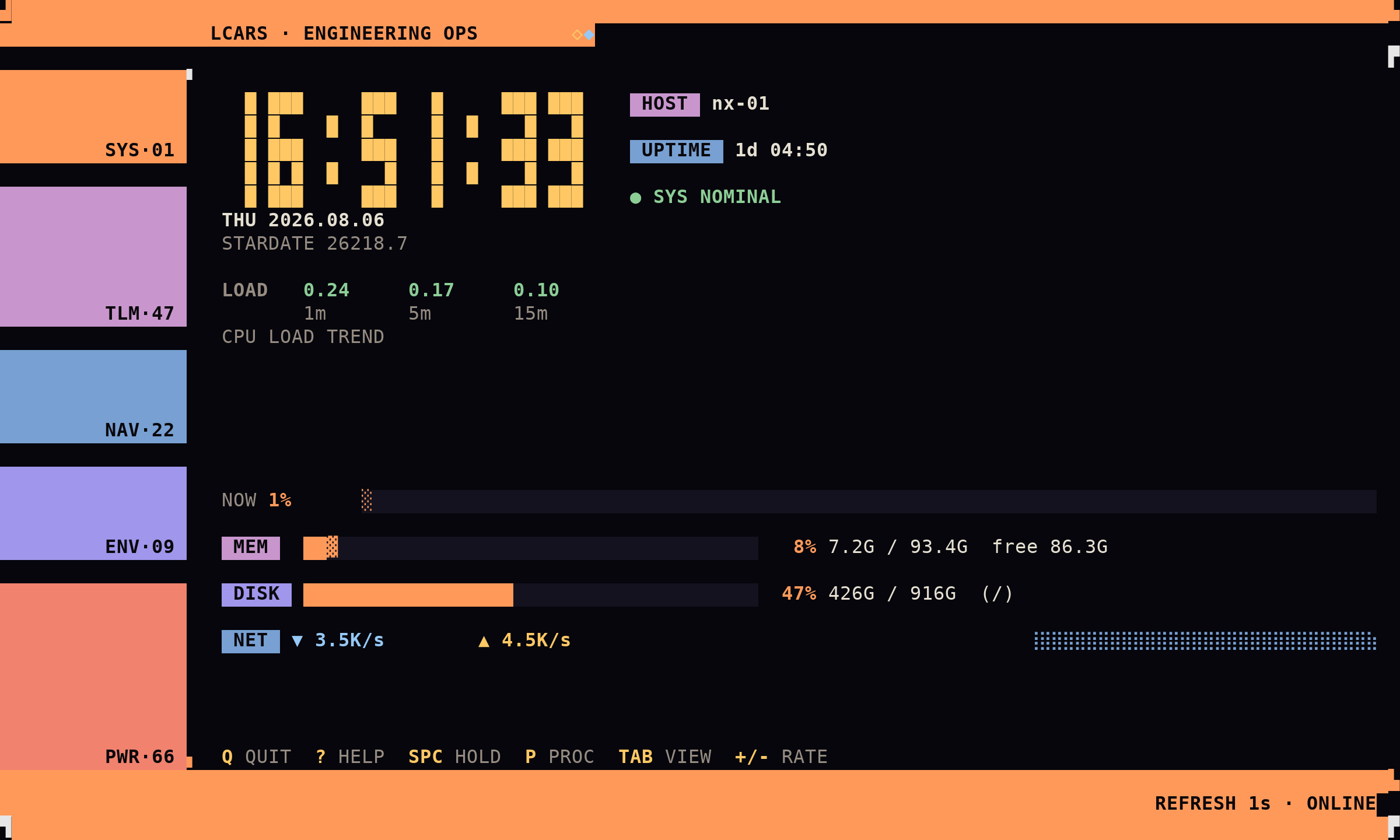
Only a point and a half behind first place, this was the most balanced submission of the eight. It has an excellent dominant clock, a strong asymmetric rail stack, a confident palette, and real negative space. During the blind evaluation I marked its central field as less structurally interlocked than V07’s.
Everything else is close to flawless: Go with a custom renderer, cleanly isolated native collectors, deterministic sampling and render tests, and complete documentation. Normal quit, CTRL + C, and SIGTERM all restored cursor, alternate screen, and termios. It also recorded the lowest steady-state terminal traffic of the leading entries at 703 bytes per second.
3. Fable 5 — 93.5
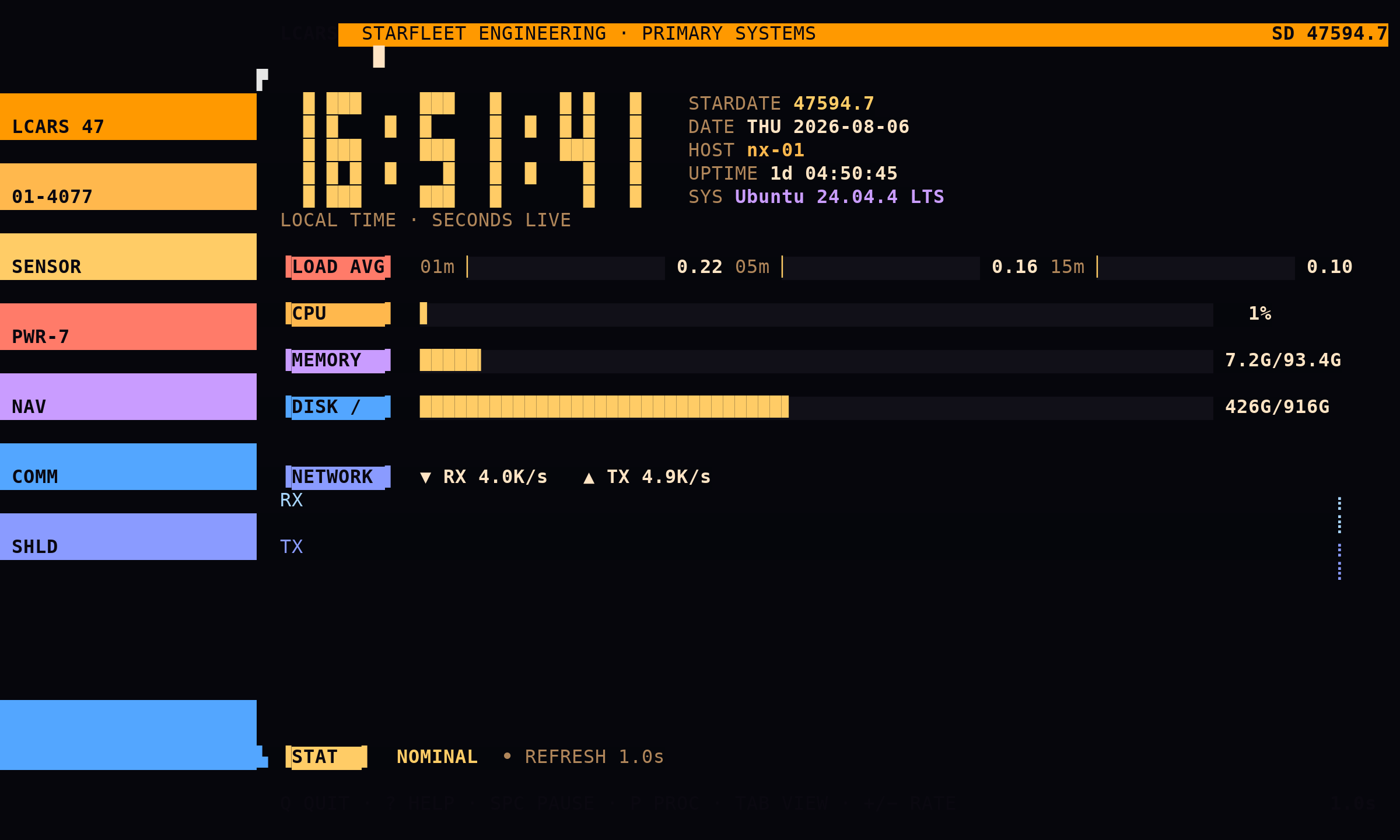
This submission had the strongest engineering relative to its visual score. It is vendored, offline-oriented Go with separate Darwin and Linux collectors, excellent fallbacks, its own capture utility, thorough tests, and documentation good enough that I used it as the reference for what the deliverables were supposed to look like. Redirected output fails safely with an actionable message rather than a panic.
The visual score is what holds it at third. During the blind evaluation I wrote that several of its controls remain flat-ended strips: the left column reads as a stack of labeled rectangles rather than the compound elbows and rounded terminals that give LCARS its shape language. It has a clear focal clock and deliberate segmentation but flatter geometry overall. 3.13 ms startup, 0.20% idle CPU, 9,928 KiB RSS.
4. GPT-5.6 Sol — 90.25
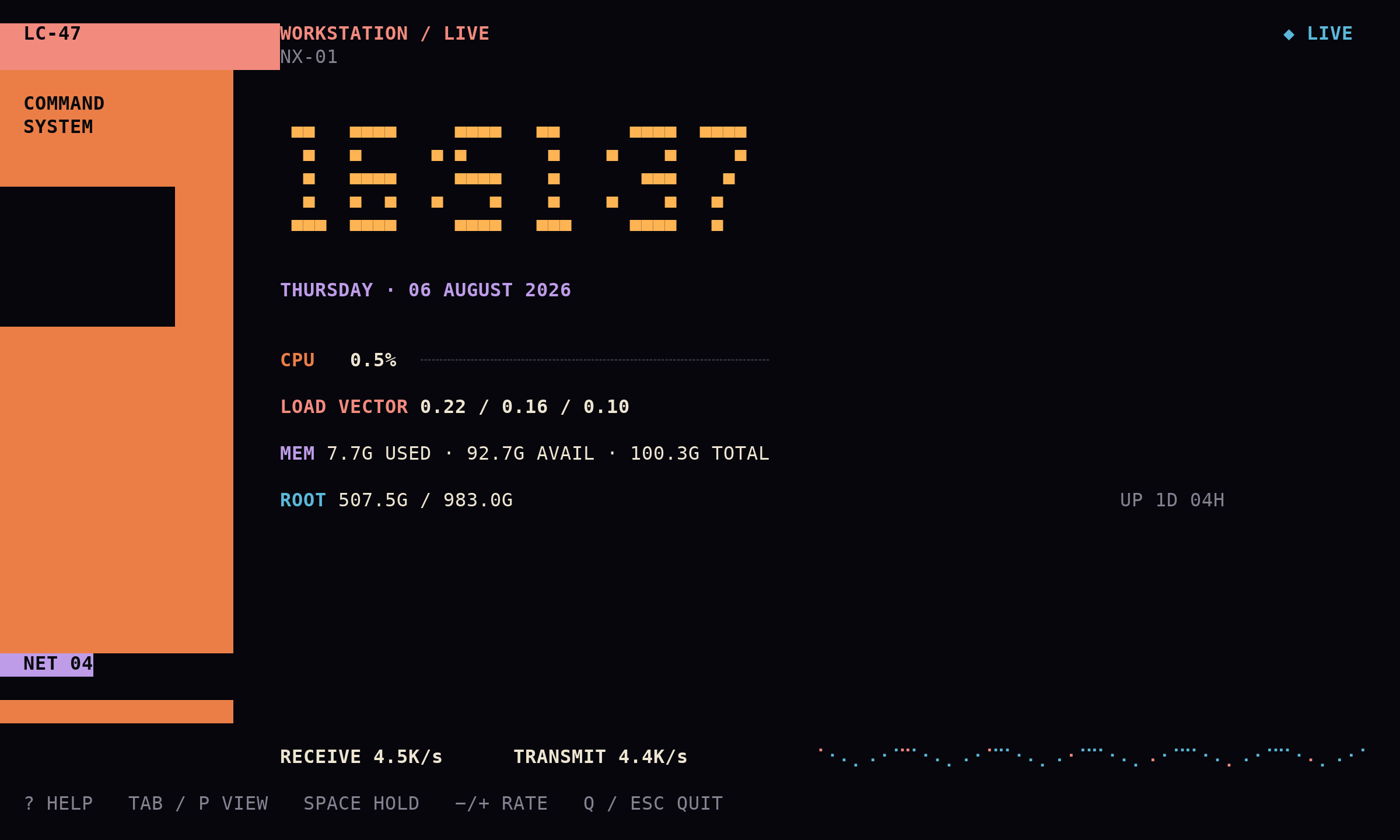
This submission is compact, fast, and polished. It has strong hierarchy and a sweeping left elbow, but during the blind evaluation I noted that the elbow reads as one large continuous slab, and the segmentation rhythm that makes LCARS feel like a control surface is mostly absent. It is a clean, restrained interpretation rather than an ambitious one.
1.93 ms startup, 0.30% idle CPU, 745 KB binary. All lifecycle probes restored correctly, and redirected output produces genuinely useful capture guidance instead of an error. Nine tests and less explicit OS isolation than the top three, which is where the remaining points went.
5. GPT-5.5 — 86.0
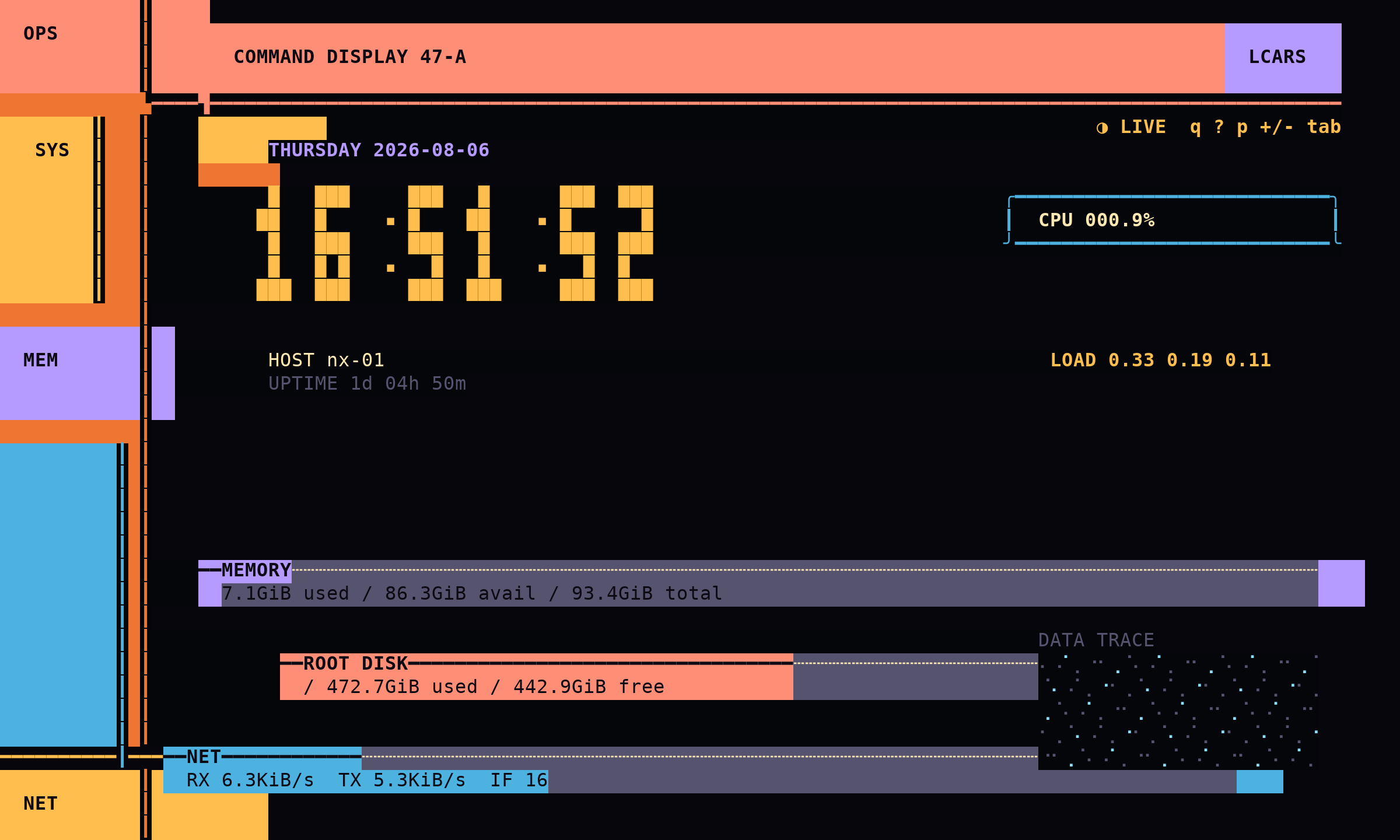
This one has deep compound framing and good segmentation, but during the blind evaluation I marked the hierarchy as indecisive and the overall result as somewhat box-like. It has the right LCARS pieces without quite pulling the composition together.
The deductions are mostly performance. Startup was 126.19 ms: inside the 250 ms target, but two orders of magnitude slower than the leaders. Idle CPU was 4.10%, second worst in the field. Eight tests. Everything correctness-related passed: metrics work through sysinfo, and all tested exits restored terminal state.
6. Kimi K3 — 84.0
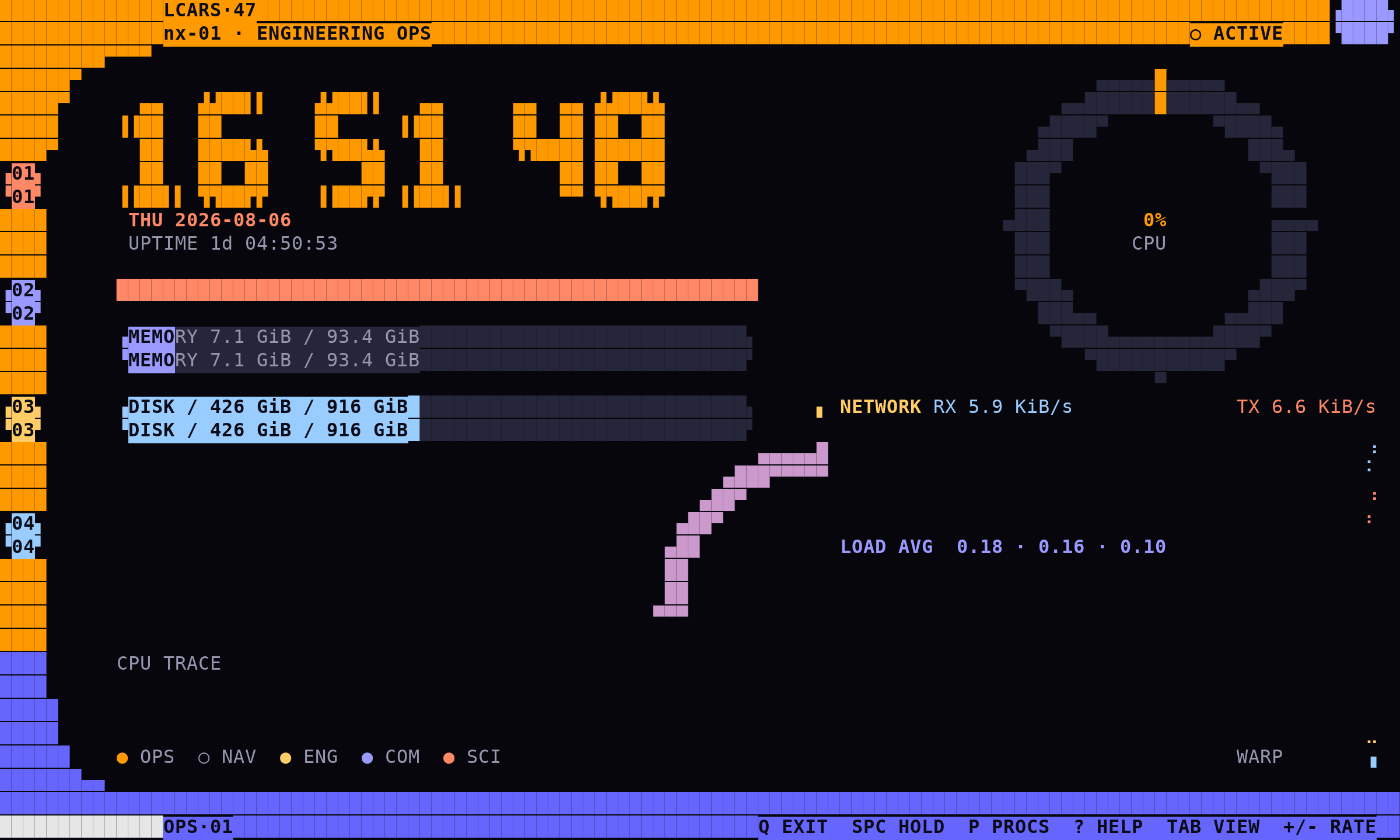
This is the submission where the blind visual test and the engineering evaluation disagreed the most, and it is a good example of why I did the two halves separately.
During the blind evaluation I scored it 31.5, ahead of Opus 4.8 on shape language in places. It has a bold silhouette, a circular CPU dial as a focal counterpoint to the clock, a staircase rail down the left, and the best sub-cell glyph work of the eight. If the evaluation had stopped at the screenshots, it would have placed third.
Then CTRL + C did not exit. On both Linux and macOS. On Linux the probe required SIGKILL, and afterwards the terminal was left in raw mode with the cursor hidden and the alternate screen still active. The rubric caps robustness at 2/10 for exactly this, and 8 points is the difference between third and sixth.
There was also a smaller honesty problem: cargo fmt --check failed on the delivered source despite a README claiming clean formatting, and the README claimed 37 tests but only 36 ran.
7. Grok 4.5 — 82.5
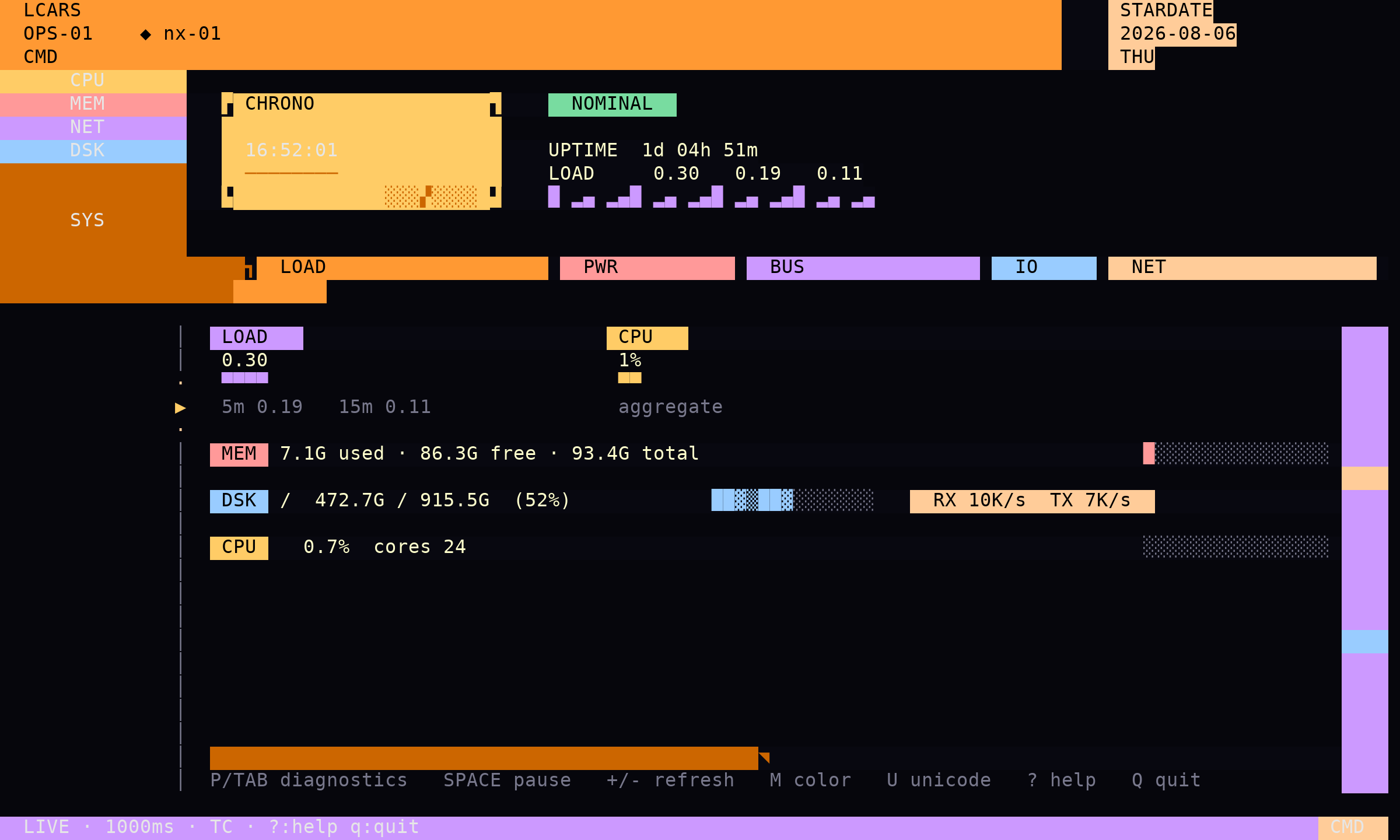
This is a coherent segmented command deck with excellent breathing room. It leans toward horizontal telemetry rows and uses less compound elbow shaping than the leaders. In the blind evaluation it tied GPT-5.6 Sol at 30.0.
Normal quit and CTRL + C restored correctly, but SIGTERM left raw mode, hidden cursor, and the alternate screen active on Linux and emitted no restoration at all on macOS. It also posted the worst performance numbers in the field: 118.25 ms startup and 6.50% idle CPU, with 8,092 KiB RSS. There is no CLI, no --help, and no capture mode. Color and Unicode modes are reachable only interactively, which is also why its fallback capture required sending keystrokes rather than passing flags.
8. Sonnet 5 — 81.0
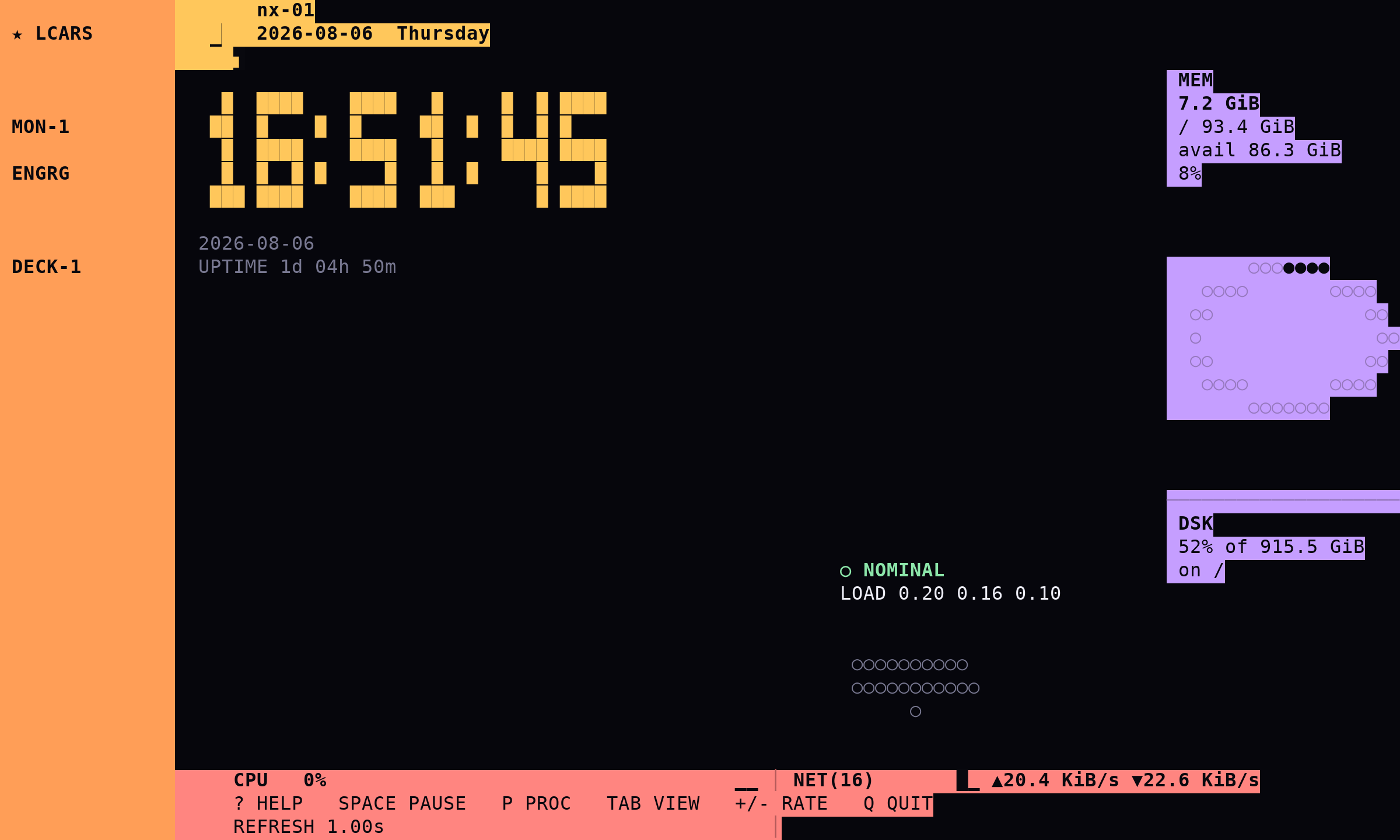
This submission was last in the blind visual scores and last overall, and both verdicts point at the same thing. The clock is memorable and the negative space is real, but during the blind evaluation I wrote that most of the composition is a single broad left slab plus detached right-side decorations, with metrics that feel placed rather than integrated. It scored 9.5/15 on LCARS fidelity.
The engineering is competent: clean Rust build, 31 tests, both views working, live metrics on both platforms, interactive exits restoring correctly. The specific failure is that redirecting stdout triggers a Ratatui initialization panic rather than an actionable error, which is the least graceful of the three redirected-output behaviors in the field. 2.07 ms startup but 2.80% idle CPU.
Performance
Measured on the Linux host so every submission saw identical hardware and load. Startup is process spawn to first terminal output; idle CPU and output volume were sampled after a two-second warmup.
| Model | Startup median | Idle CPU | RSS | Binary | Steady output/s |
|---|---|---|---|---|---|
| Kimi K3 | 1.70 ms | 0.60% | 3,044 KiB | 491 KB | 18,724 B |
| Opus 5 | 1.90 ms | 0.00% | 2,588 KiB | 544 KB | 3,289 B |
| GPT-5.6 Sol | 1.93 ms | 0.30% | 2,692 KiB | 745 KB | 8,024 B |
| Sonnet 5 | 2.07 ms | 2.80% | 6,332 KiB | 875 KB | 401 B |
| Opus 4.8 | 2.46 ms | 0.00% | 4,408 KiB | 2.08 MB | 703 B |
| Fable 5 | 3.13 ms | 0.20% | 9,928 KiB | 3.17 MB | 1,123 B |
| Grok 4.5 | 118.25 ms | 6.50% | 8,092 KiB | 927 KB | 634 B |
| GPT-5.5 | 126.19 ms | 4.10% | 5,740 KiB | 897 KB | 7,250 B |
All eight met the 250 ms startup target. The two Go submissions carry visibly larger binaries and, in Fable 5’s case, noticeably more resident memory; neither cost them anything meaningful, because the prompt asked for a standalone executable and a responsive UI, not the smallest possible artifact.
Pay attention to the output column. Kimi K3 writes nearly 30 times as much data to the terminal per second as Opus 5 for a comparable scene. Over SSH on a slow link, that is the difference between a smooth display and a smeared one.
I only have API cost data for two submissions. Grok 4.5 reported $1.07 across 88,664 tokens and Kimi K3 reported $4.76 across 135,036 tokens.
What blinding actually bought
It identified a submission that looked good but had big bugs. Kimi K3 dropped from third to sixth after moving on from the visual evaluation.
It removed self-reported evidence. Excluding every model’s own supplied captures and rebuilding from clean snapshots turned out to matter more than the anonymization. Two submissions made README claims that did not survive being run. Treat a model’s screenshot of its own output like marketing.
There are still limitations to this evaluation. Performance is a point-in-time measurement on one Linux host, not a benchmark sweep. Collectors were checked for plausibility against native tools on both platforms but I did not fault-inject every permission and counter-rollover path. And the visual half, blind or not, is still my personal taste. A blind test only removes the identity bias.
Conclusion
In the end there was a 17.5-point spread between the best and worst of the eight models. The top four are all genuinely good programs I would run. The bottom four are also good programs, each with one specific thing wrong that a screenshot would never have told me: a hung CTRL + C, a missed SIGTERM, a panic on a redirected pipe, or an idle loop burning 6.5% of a core to draw a mostly static screen.
The reality is we are reaching a point where any model will be capable of creating anything you desire. Here I used a “one-shot” prompt approach but I believe the best way to develop with agents is to iterate on your work instead of trying to have an agent produce an entire app from only a single prompt.